

Google Tests Sliding Carousel for Link Cards in AI Mode and AI Overviews
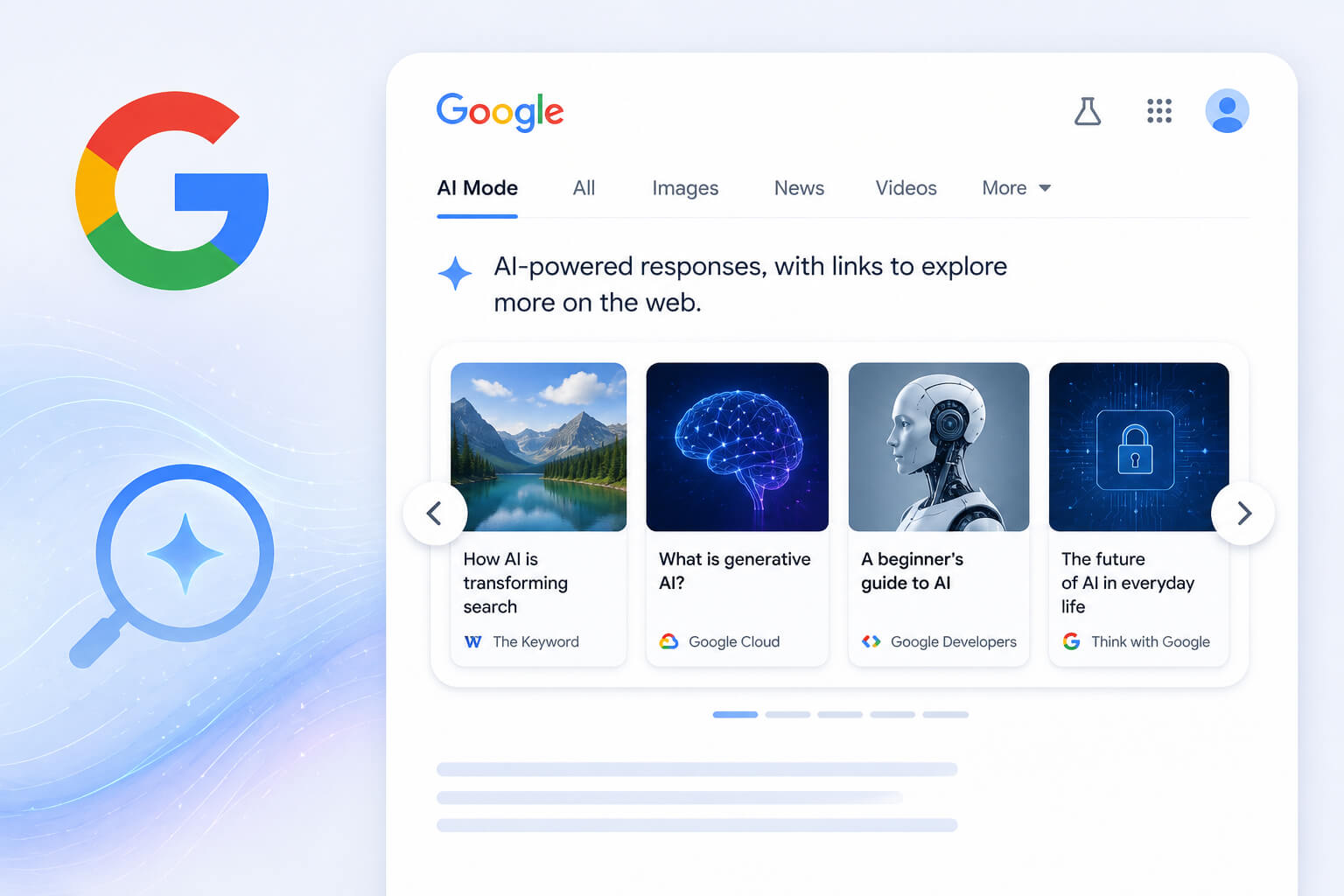
Google is testing a new sliding carousel design for citation link cards in AI Mode and AI Overviews, giving users a different way to browse sources connected to AI-generated search answers.
The test appears to be focused on mobile search results. Instead of showing citation links in the usual vertical format, Google is experimenting with a sticky carousel that appears at the bottom of the screen when a user taps a citation bubble.
The change could make source links more visible and easier to browse, especially on mobile devices where screen space is limited.
Google Experiments With AI Search Citations
Google’s AI Overviews and AI Mode are designed to provide AI-generated responses directly within search results. These answers often include citation links that point users to publisher websites, product pages, forums, or other sources used to support the response.
In the latest test, tapping a citation bubble opens a sliding carousel at the bottom of the screen. Users can then swipe left or right to view link cards connected to the AI-generated answer.
The test was spotted by SEO observer Gagan Ghotra, who shared a video showing the interface in action. According to the report, the carousel appears as a sticky slider on mobile, replacing or supplementing the vertical list of citations that users may currently see.
How the Sliding Carousel Works
The new Google AI Mode sliding carousel appears to work as a source discovery feature.
When a user selects a citation inside an AI-generated answer, the related links are displayed in card format at the bottom of the screen. Each card can be browsed horizontally, allowing users to move through multiple sources without leaving the AI answer immediately.
This layout may help Google keep users engaged with AI responses while still providing access to external links.
For users, the carousel could make citations easier to explore. For publishers, the change may influence how often source links are seen and clicked within AI search results.
Why This Matters for Publishers and SEOs
The test is important because link visibility inside AI search features has become a major concern for publishers, marketers, and SEO professionals.
As Google continues to expand AI-generated search experiences, website owners are watching closely to see how traffic from search results may change. Citation placement, link design, and click behavior could all affect how much referral traffic publishers receive from AI Overviews and AI Mode.
A sliding carousel may improve the presentation of citation links by making them more interactive. However, it may also change how users interact with sources, especially if the AI-generated answer already satisfies the query.
For SEO professionals, this test highlights the need to monitor how Google displays citations in AI search results and how those design changes affect organic traffic.
Google Continues to Refine AI Mode
Google has been making ongoing changes to AI Mode and AI Overviews as it works to improve the search experience. The company is testing different ways to present information, cite sources, and connect users with relevant web pages.
The sliding carousel test suggests that Google is still experimenting with how links should appear inside AI-powered search results.
While the feature does not appear to be fully rolled out, it shows Google’s continued focus on making AI search more visual, mobile-friendly, and interactive.
Possible Impact on Search Traffic
The impact of the Google AI Mode sliding carousel will depend on how widely the feature is launched and how users respond to it.
If the carousel makes citation links easier to notice, publishers could benefit from improved visibility inside AI search results. If users remain within the AI answer and swipe through links without clicking through, the effect on referral traffic may be more limited.
For now, the test is another sign that Google’s AI search interface is evolving quickly. Businesses, publishers, and SEO teams should continue tracking these changes as they may affect content visibility, search rankings, and organic traffic patterns.
What Happens Next
Google has not confirmed a full rollout of the sliding carousel for AI Mode and AI Overviews. As with many search interface tests, the feature may change, expand, or disappear depending on user feedback and performance data.
Still, the experiment offers another look at how Google may shape the future of AI-powered search. For publishers and digital marketers, the key takeaway is clear: citation visibility in AI search is becoming an important part of SEO strategy.
As Google continues testing new layouts, website owners should focus on creating trustworthy, useful, and well-structured content that can be cited in AI search experiences.
Google is testing a new sliding carousel design for citation link cards in AI Mode and AI Overviews, giving users a different way to browse sources connected to AI-generated search answers.
The test appears to be focused on mobile search results. Instead of showing citation links in the usual vertical format, Google is experimenting with a sticky carousel that appears at the bottom of the screen when a user taps a citation bubble.
The change could make source links more visible and easier to browse, especially on mobile devices where screen space is limited.
Google Experiments With AI Search Citations
Google’s AI Overviews and AI Mode are designed to provide AI-generated responses directly within search results. These answers often include citation links that point users to publisher websites, product pages, forums, or other sources used to support the response.
In the latest test, tapping a citation bubble opens a sliding carousel at the bottom of the screen. Users can then swipe left or right to view link cards connected to the AI-generated answer.
The test was spotted by SEO observer Gagan Ghotra, who shared a video showing the interface in action. According to the report, the carousel appears as a sticky slider on mobile, replacing or supplementing the vertical list of citations that users may currently see.
How the Sliding Carousel Works
The new Google AI Mode sliding carousel appears to work as a source discovery feature.
When a user selects a citation inside an AI-generated answer, the related links are displayed in card format at the bottom of the screen. Each card can be browsed horizontally, allowing users to move through multiple sources without leaving the AI answer immediately.
This layout may help Google keep users engaged with AI responses while still providing access to external links.
For users, the carousel could make citations easier to explore. For publishers, the change may influence how often source links are seen and clicked within AI search results.
Why This Matters for Publishers and SEOs
The test is important because link visibility inside AI search features has become a major concern for publishers, marketers, and SEO professionals.
As Google continues to expand AI-generated search experiences, website owners are watching closely to see how traffic from search results may change. Citation placement, link design, and click behavior could all affect how much referral traffic publishers receive from AI Overviews and AI Mode.
A sliding carousel may improve the presentation of citation links by making them more interactive. However, it may also change how users interact with sources, especially if the AI-generated answer already satisfies the query.
For SEO professionals, this test highlights the need to monitor how Google displays citations in AI search results and how those design changes affect organic traffic.
Google Continues to Refine AI Mode
Google has been making ongoing changes to AI Mode and AI Overviews as it works to improve the search experience. The company is testing different ways to present information, cite sources, and connect users with relevant web pages.
The sliding carousel test suggests that Google is still experimenting with how links should appear inside AI-powered search results.
While the feature does not appear to be fully rolled out, it shows Google’s continued focus on making AI search more visual, mobile-friendly, and interactive.
Possible Impact on Search Traffic
The impact of the Google AI Mode sliding carousel will depend on how widely the feature is launched and how users respond to it.
If the carousel makes citation links easier to notice, publishers could benefit from improved visibility inside AI search results. If users remain within the AI answer and swipe through links without clicking through, the effect on referral traffic may be more limited.
For now, the test is another sign that Google’s AI search interface is evolving quickly. Businesses, publishers, and SEO teams should continue tracking these changes as they may affect content visibility, search rankings, and organic traffic patterns.
What Happens Next
Google has not confirmed a full rollout of the sliding carousel for AI Mode and AI Overviews. As with many search interface tests, the feature may change, expand, or disappear depending on user feedback and performance data.
Still, the experiment offers another look at how Google may shape the future of AI-powered search. For publishers and digital marketers, the key takeaway is clear: citation visibility in AI search is becoming an important part of SEO strategy.
As Google continues testing new layouts, website owners should focus on creating trustworthy, useful, and well-structured content that can be cited in AI search experiences.