

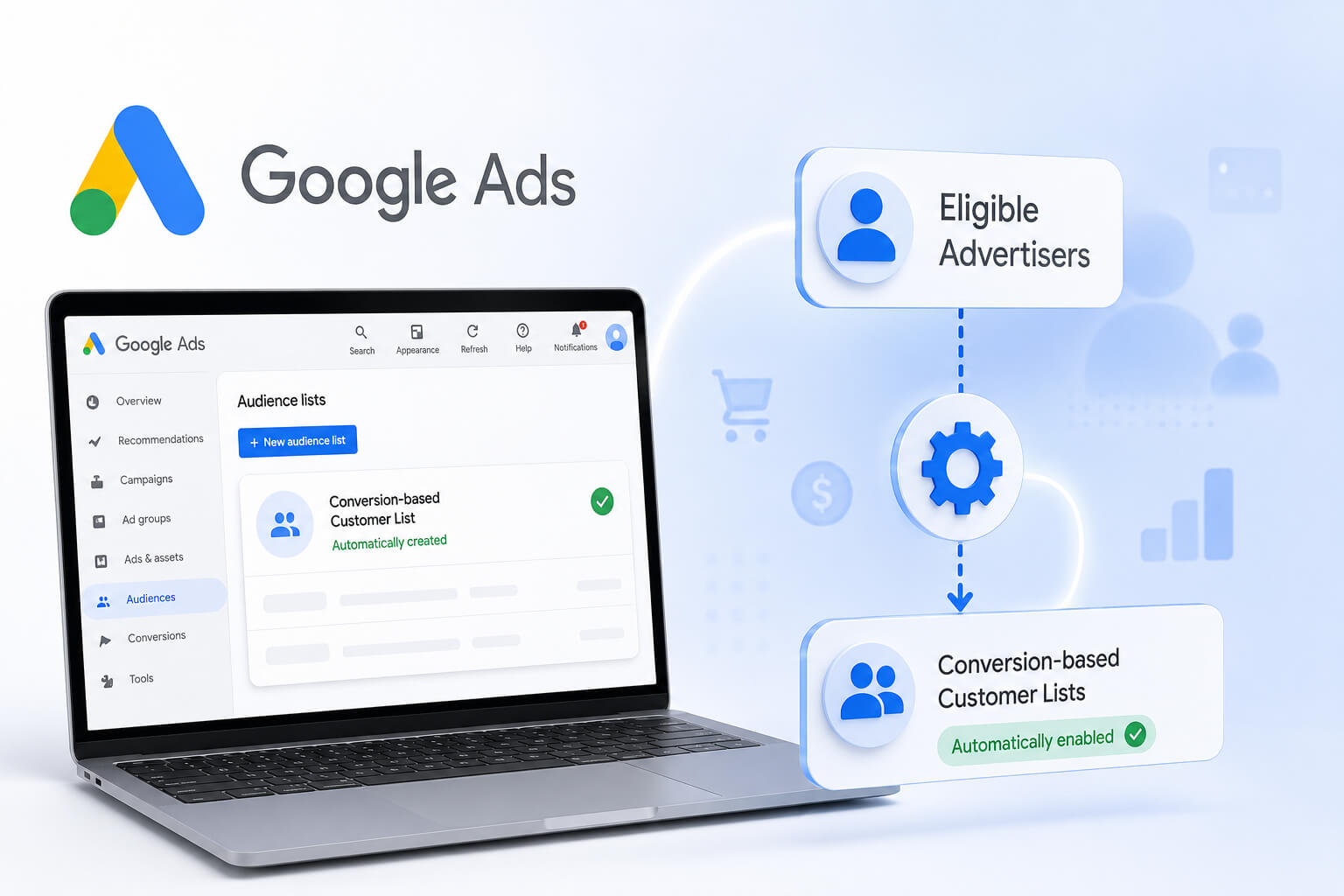
Google Ads is preparing to automatically enable conversion-based customer lists for eligible advertisers, giving more businesses access to audience-building tools powered by their own conversion data.
The change is aimed at advertisers already using Enhanced Conversions and Customer Match but who have not yet turned on conversion-based customer lists. Starting August 18, Google will begin processing eligible conversion data and making these audience lists available inside affected Google Ads accounts.
For advertisers, this means Google is making it easier to build first-party data audiences without requiring a separate manual setup process.
What Are Conversion-Based Customer Lists?
Conversion-based customer lists allow advertisers to create audience segments using customer data collected through conversion actions. Instead of relying only on third-party signals, advertisers can use information from people who have already interacted with their business, such as completing a purchase, submitting a lead form, or taking another valuable action.
These lists can then be used as part of a broader targeting or remarketing strategy in Google Ads.
The goal is to help advertisers reach more relevant audiences while adapting to the ongoing privacy changes affecting digital advertising.
Who Will Be Affected by the Google Ads Update?
The automatic enrollment applies only to eligible advertisers who meet specific conditions.
Advertisers are likely to be affected if they are already using both Enhanced Conversions and Customer Match but have not yet enabled conversion-based customer lists.
Google says no action is required from eligible advertisers for the feature to become available. Once enabled, the customer lists will be generated automatically, and advertisers can decide whether to attach those audiences to campaigns or ad groups.
Why This Matters for Advertisers
This update highlights Google’s continued push toward first-party data strategies. As privacy rules, browser changes, and tracking limitations continue to reshape online advertising, platforms are encouraging marketers to rely more on data collected directly from customer interactions.
For businesses, Google Ads conversion-based customer lists could help improve campaign relevance by creating audiences from users who have already shown interest or intent.
This may be especially useful for advertisers running campaigns focused on lead generation, ecommerce purchases, repeat customers, or high-value user actions.
Advertisers Can Still Opt Out
While Google is automatically enabling the feature for eligible accounts, advertisers who do not want conversion-based customer lists activated can opt out before August 18.
To avoid automatic data processing, advertisers need to disable conversion-based customer lists within their Google Ads account settings before the deadline.
After August 18, Google will begin processing data and generating the lists automatically for eligible accounts that have not opted out.
What Advertisers Should Do Next
Advertisers should review their Google Ads settings before August 18 to decide whether this feature aligns with their audience strategy, privacy requirements, and internal data policies.
Businesses should also check how Enhanced Conversions and Customer Match are currently configured in their accounts. Even though Google is simplifying the setup process, advertisers remain responsible for understanding how customer data is used in their campaigns.
For many marketers, this update could be a useful way to improve targeting with first-party data. However, teams with strict privacy, compliance, or consent requirements may want to review the setting carefully before automatic enrollment begins.
The Bigger Picture
Google’s move reflects a larger shift in digital advertising. As traditional tracking methods become less reliable, platforms are placing more emphasis on consent-based, first-party data.
By automatically enabling conversion-based customer lists, Google is making audience creation more accessible for advertisers already using its advanced conversion and customer-matching tools.
The update may help advertisers build stronger audience segments, but it also makes account review more important. Brands should use the time before August 18 to confirm whether automatic enrollment supports their marketing and privacy goals.