


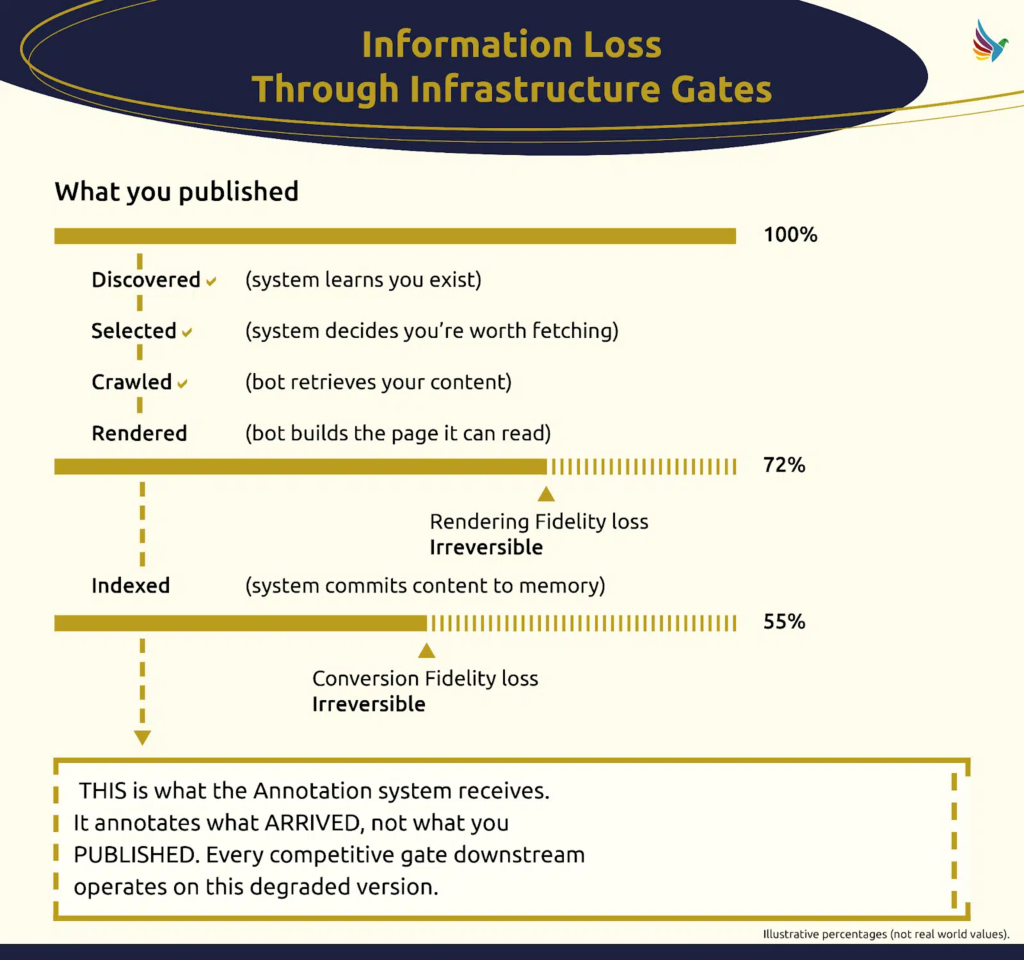
Search engine infrastructure gates control how web content moves through search systems before appearing in results. These gates determine whether a page can be discovered, processed, and stored in search databases. The process includes five stages: discovery, selection, crawling, rendering, and indexing. Each stage acts as a filter. A page must pass every stage before search engines can store and evaluate it.
Discovery Gate in Search Engine Infrastructure Gates
Discovery is the first stage in the search engine infrastructure gates process. At this step, search systems become aware of a webpage. Pages are discovered through several signals. XML sitemaps help search engines identify new or updated URLs. IndexNow notifications also send alerts when content changes. Internal links guide crawlers from one page to another. If a page is not discovered, it cannot enter the next stage of processing.
Selection Gate in Search Engine Infrastructure Gates
Selection determines which discovered pages should be crawled. Search engines do not process every discovered URL immediately. Systems evaluate signals that suggest value or relevance. Pages considered low priority may wait longer for processing. Excessive low-quality pages can reduce efficiency in this stage. Selection helps search engines manage resources before crawling begins.
Crawling and Rendering Gates in Search Infrastructure
Crawling is the stage where bots request pages from web servers. The crawler downloads HTML files and other resources. This step gathers the raw material required to analyze the page. Server access, response speed, and permission rules influence crawling.
Rendering follows crawling. Search engines process scripts and page resources to create the final page layout. Rendering allows systems to interpret visible content. Problems during rendering can limit the information available for analysis.
Indexing Gate in Search Engine Infrastructure Gates
Indexing is the final infrastructure stage. After rendering, search engines analyze page content and structure. The processed data is stored in a search index. The index acts as the database used to answer search queries. Pages stored with incomplete information may have limited representation in search systems.
The five search engine infrastructure gates form the technical foundation of search processing. Each stage must function correctly before ranking and evaluation occur.
Source: https://searchengineland.com/the-five-infrastructure-gates-behind-crawl-render-and-index-471231