

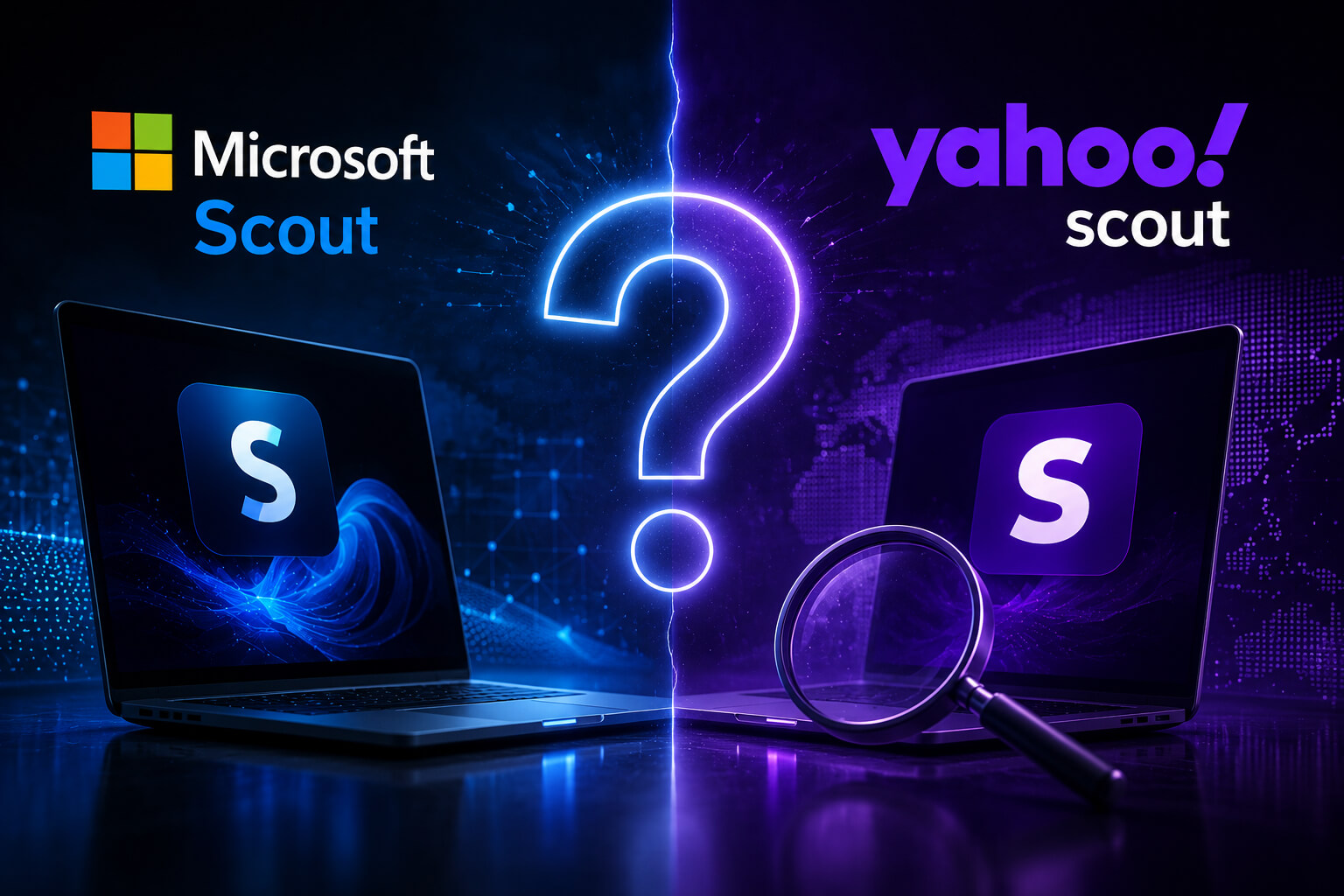
Microsoft’s latest AI agent announcement has sparked discussion in the search industry after the company introduced a product called Microsoft Scout, just months after Yahoo announced Yahoo Scout.
The naming overlap has drawn attention because Yahoo Scout was previously introduced in partnership with Microsoft, using Microsoft Bing technology to support AI-powered web grounding. The situation has raised questions about how the two Scout-branded products relate to each other and what Microsoft’s broader Web IQ strategy means for the future of AI search.
What Is Microsoft Scout?
Microsoft Scout is described as a personal AI agent for work. It is designed to help users manage tasks across workplace tools such as Teams and Outlook.
The agent is built to understand how people work and assist with activities such as meeting preparation, scheduling conflicts, and routine workplace tasks. Microsoft is positioning Scout as part of its wider push into AI agents that can act more proactively across enterprise workflows.
The product was discussed around Microsoft Build, where the company also highlighted major AI search and agent-related updates.
Why Microsoft Scout Is Getting Attention
The reason Microsoft Scout has attracted extra attention is not only because of what it does, but also because of its name.
Earlier in 2026, Yahoo announced Yahoo Scout, an AI-powered product developed with support from Microsoft technology. Yahoo Scout was presented as part of Yahoo’s effort to deliver AI-generated answers grounded in reliable information from the open web.
Because Yahoo Scout was announced before Microsoft Scout, the similar naming has led to speculation within the search community about whether the overlap was intentional, coincidental, or simply an awkward branding choice.
What Is Yahoo Scout?
Yahoo Scout is Yahoo’s AI search and discovery experience. It was introduced as a tool that combines Yahoo’s content ecosystem with Microsoft Bing’s grounding capabilities.
The goal of Yahoo Scout is to provide answers informed by authoritative sources across the open web. Yahoo also highlighted its participation in Microsoft’s Publisher Content Marketplace pilot, showing a shared focus on supporting publishers and improving content discovery.
This partnership made the Microsoft Scout announcement more noticeable, since both companies are connected through search technology and AI-powered web experiences.
Microsoft Web IQ and the Future of AI Search
Microsoft Scout is part of a much larger AI strategy involving Microsoft Web IQ.
Web IQ is Microsoft’s next-generation search engine platform built for AI agents. Unlike traditional search engines designed mainly for human users, Web IQ is designed to help AI systems access fresh, reliable, and relevant web data.
Microsoft says Web IQ is focused on improving grounding for AI agents by providing access to web pages, news, images, videos, and other real-world information. This is important because AI agents need current and trustworthy data to produce useful responses and complete tasks accurately.
As AI agents become more common, search technology is also changing. Instead of search engines only serving human queries, platforms like Web IQ are being developed to serve large volumes of automated agent queries.
Why the Scout Naming Overlap Matters
The Microsoft Scout and Yahoo Scout naming overlap matters because both products sit within the same broader AI search ecosystem.
Yahoo Scout was announced with Microsoft technology as a key part of its foundation. Microsoft Scout, meanwhile, appears to be a workplace-focused AI agent that uses Microsoft’s broader AI and productivity stack.
While the two products may serve different use cases, the shared name could create confusion among users, publishers, and the search industry. It also highlights how quickly major technology companies are launching AI products, sometimes with overlapping language and branding.
What This Means for Publishers and Search Marketers
For publishers, marketers, and SEO professionals, the bigger story is Microsoft’s growing focus on AI-powered search infrastructure.
Web IQ signals a shift toward AI systems that rely on search grounding to deliver real-time information. This could affect how content is discovered, cited, and surfaced by AI agents in the future.
For search marketers, it is another reminder that SEO is expanding beyond traditional search results pages. Content may increasingly need to be optimized not only for human search users, but also for AI agents that retrieve, summarize, and act on web information.
Microsoft and Yahoo’s AI Search Relationship
Microsoft and Yahoo have a long history in search, and Yahoo’s use of Microsoft Bing technology has been part of that relationship for years.
The launch of Yahoo Scout showed that the partnership is extending into AI-powered search and content discovery. Microsoft’s own Scout announcement now adds a new layer of complexity because it introduces another product with the same name within Microsoft’s AI ecosystem.
At this stage, there is no clear indication that Microsoft Scout and Yahoo Scout are the same product. Based on available information, Microsoft Scout appears focused on workplace productivity, while Yahoo Scout is more focused on AI-powered search and web answers.
The Bigger Picture
The discussion around Microsoft Scout and Yahoo Scout reflects a larger shift in the search industry.
Major technology companies are racing to build AI agents, grounding APIs, and search systems designed for an agent-driven web. Microsoft Web IQ is one of the clearest examples of this shift, positioning Microsoft as a major infrastructure provider for AI search and agent experiences.
Whether the Scout naming overlap becomes a lasting issue or a short-term curiosity, it shows how competitive and fast-moving the AI search market has become.
For now, Microsoft Scout and Yahoo Scout appear to represent different parts of the same transformation: a move from traditional search toward AI-powered agents that rely on fresh, reliable web data to complete tasks and answer questions.