

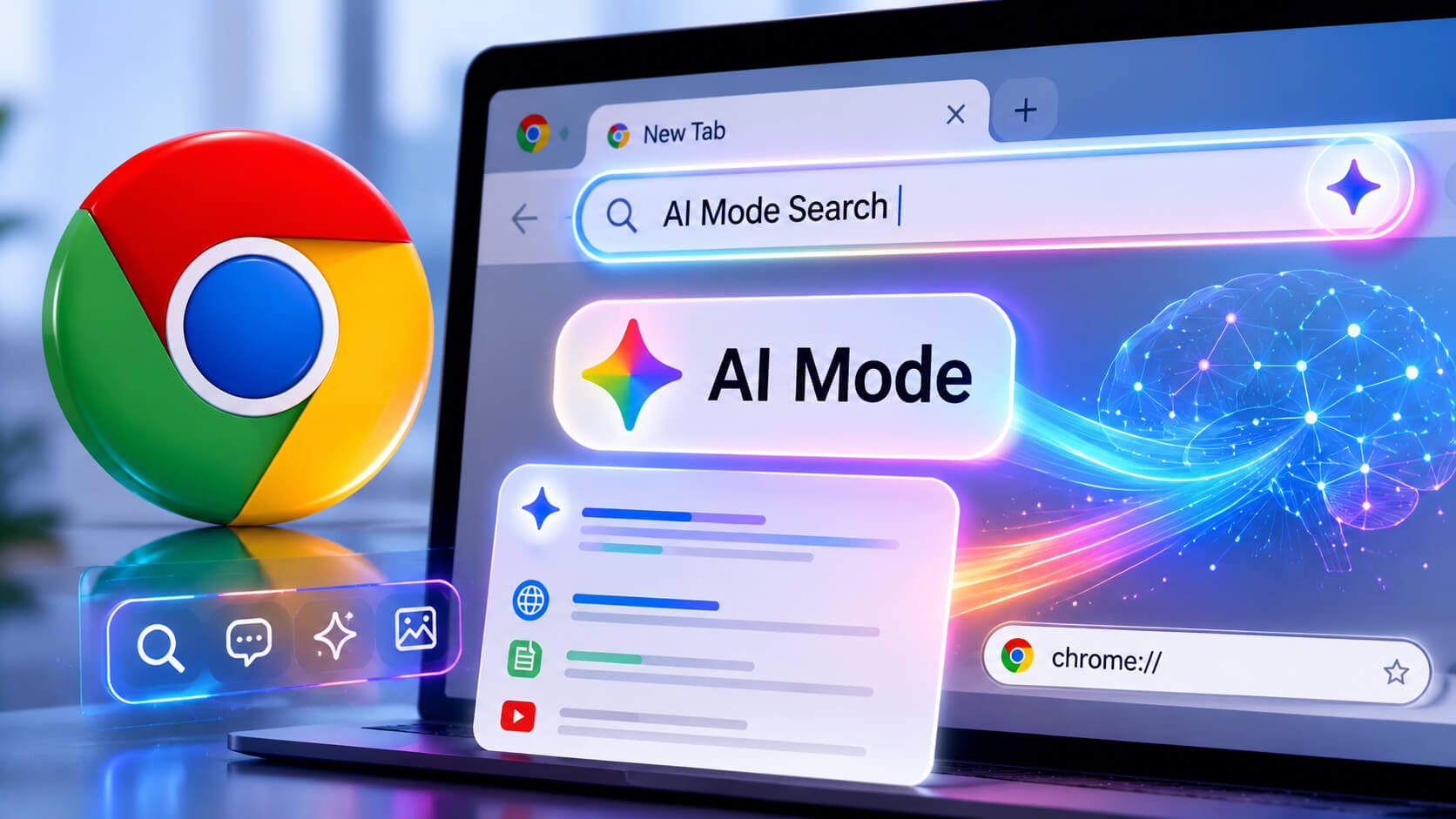
Google Chrome is testing another major AI-powered change to Chrome, and this one could reshape how people search from the browser’s address bar.
A new experimental Chrome Canary feature appears to send search queries directly into Google’s AI Mode instead of opening the traditional Google Search results page. That means users typing a question into Chrome’s address bar may see an AI-generated answer first, rather than a familiar list of blue links.
For now, the feature is only being tested and may never roll out publicly. Still, the experiment shows how aggressively Google is exploring AI as the new front door to search.
What Is the New Chrome AI Mode Test?
The test reportedly appears as a Chrome flag called “Fulfill Searchbox queries in AI Mode.” When enabled, the feature changes how Chrome handles searches from the omnibox, which is the address bar users type into every day.
Instead of sending a query to the standard Google Search results page, Chrome opens the query in AI Mode. The experience is similar to Google’s AI Overviews, but with a more conversational layout that encourages users to ask follow-up questions.
This could make searching feel more like chatting with an AI assistant than browsing through web pages.
Why This Matters for Google Search
For more than two decades, Google Search has been built around ranking web pages and showing users a list of relevant links. AI Mode changes that pattern by giving users a summarized answer first, with source links included inside the AI response.
That may be convenient for users who want quick answers, but it could also reduce direct traffic to publishers, blogs, and websites that rely on search visibility.
If Google eventually pushes this type of experience deeper into Chrome, it could have a major impact on SEO, content discovery, and the broader web publishing ecosystem.
Google Says It Is Only an Experiment
Despite the attention around the test, this does not mean Chrome is about to replace normal Google Search with AI Mode.
Reports suggest that Google has described the feature as exploratory, with no current plans to make it the default experience for all Chrome users. Chrome Canary is often used to test experimental features, many of which never reach the stable version of the browser.
Still, the test is important because it reveals the direction Google is investigating.
AI Is Becoming the New Search Interface
Google has already been expanding AI across Search through AI Overviews and AI Mode. These tools are designed to answer more complex questions, handle conversational prompts, and support multimodal search experiences involving text, images, videos, files, and even browser tabs.
The Chrome test takes that strategy one step further by moving AI closer to the point where searches begin: the address bar.
If AI Mode becomes more deeply integrated into Chrome, users may no longer think of search as typing keywords into a search engine. Instead, they may expect AI to interpret their intent, summarize information, and guide them through follow-up questions.
What It Means for Website Owners and Publishers
For publishers and website owners, this shift is worth watching closely. AI-generated answers could change how users interact with search results and how often they click through to original sources.
Traditional SEO strategies may need to evolve as AI search becomes more prominent. Content creators may need to focus not only on ranking in search results, but also on being cited, summarized, and trusted by AI-powered search systems.
High-quality, well-structured, authoritative content will likely become even more important as AI tools decide which sources to reference.
The Bottom Line
Google Chrome’s AI Mode search test is not a confirmed product launch, but it is another sign that Google is rethinking the future of search.
By testing AI directly inside Chrome’s address bar, Google is exploring a world where AI-generated answers come before traditional search results. Whether users embrace that shift remains to be seen, but one thing is clear: AI search is quickly becoming one of the biggest changes to how people find information online.