

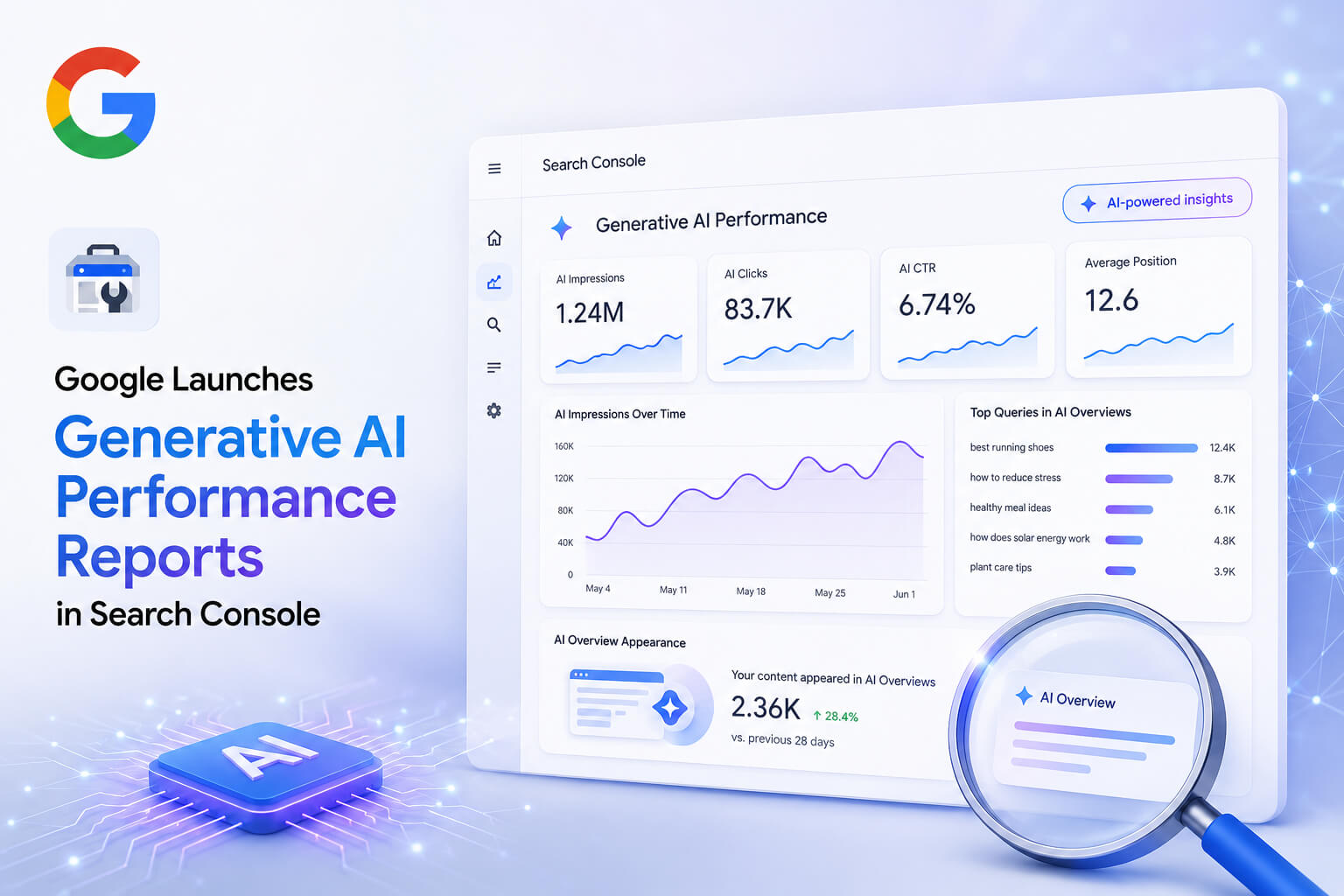
Google has introduced new generative AI performance reports in Search Console, giving creators, publishers, influencers, and website owners a clearer way to understand how their content appears across Google’s AI-powered search experiences.
The new reports are designed to show visibility in generative AI features on Google Search, including AI Overviews and AI Mode. Google is also adding dedicated reporting for generative AI features in Discover.
For creators and online publishers, the update could become an important tool for tracking how content performs as search behavior continues to shift toward AI-generated answers and discovery experiences.
What Are Google’s Generative AI Performance Reports?
Google’s generative AI performance reports are new Search Console reports that help site owners see how often their pages appear in AI-powered search features.
According to Google, the reports provide dedicated views of impressions from generative AI features in Search and Discover. This means website owners can better understand whether their content is being surfaced inside AI experiences, not just traditional search results.
The data will still be included in the overall Search Console performance report, but Google is now introducing a separate view focused specifically on visibility from generative AI features.
Why This Matters for Creators and Influencers
For creators, bloggers, influencers, newsletter publishers, and media brands, Google Search remains a major discovery channel. However, AI features are changing the way users find and interact with information online.
Instead of only clicking traditional blue links, users may now see AI-generated summaries, AI Overviews, and other search experiences that surface content in new formats.
Google’s new reports may help creators answer important questions, such as:
Are my articles appearing in AI Overviews?
Which pages are being shown in AI-powered search features?
Which countries are seeing my content in generative AI results?
Is my content gaining visibility in Discover’s AI-powered features?
How is my AI search visibility changing over time?
For creator-led businesses, these insights can help shape content strategy, SEO planning, and audience growth efforts.
What Data the New Reports Include
Google says the new Search Console reports will show several key data points for generative AI visibility.
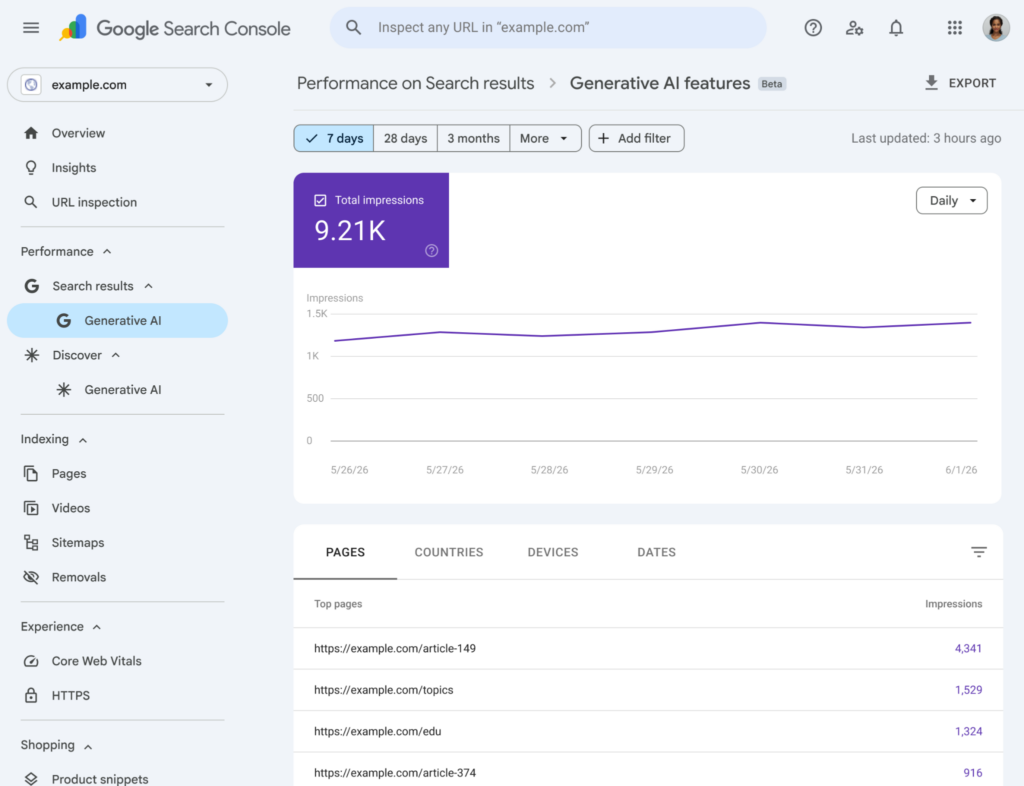
These include impressions, which show how often URLs from a website appeared in generative AI features across Search and Discover.
The reports also include page-level data, allowing creators and publishers to see which specific URLs appeared in AI features. This can help identify which articles, guides, reviews, videos, or landing pages are gaining visibility in Google’s AI search ecosystem.
Country data will also be available, helping website owners understand where their AI search visibility is coming from geographically.
For Search results, Google will also show device data, making it possible to see whether audiences are encountering content through desktop, mobile, or other devices.
The reports will also include date-based tracking with hourly, daily, weekly, and monthly granularity, giving creators a clearer view of performance changes over time.
Rollout Starts With a Subset of Websites
Google said the new generative AI performance reports are being rolled out first to a subset of websites.
The limited rollout will allow Google to test the feature and gather feedback before making the reports more widely available.
This means not every creator, publisher, or website owner will see the new reports immediately inside Search Console. However, the launch signals that Google is moving toward more transparency around AI-powered search visibility.
How Creators Can Use the New Search Console Reports
The new reports could help creators and publishers make better decisions about content planning and optimization.
For example, if a creator sees that certain evergreen guides are appearing in AI Overviews, they may decide to update those pages more regularly, add clearer structure, or expand them with more helpful information.
If a publisher notices that certain topics are gaining AI visibility in specific countries, they may use that insight to localize content or create follow-up articles for those audiences.
Influencers with blogs, creator websites, online stores, or educational content hubs can also use the reports to understand which pages Google’s AI systems are surfacing most often.
AI Search Is Becoming a Bigger Part of Creator Strategy
The launch of Google’s generative AI performance reports shows how important AI search visibility is becoming for the creator economy.
Creators are no longer only competing for rankings in traditional search results. They are also competing for visibility inside AI-generated search experiences, discovery feeds, and new formats where users may receive answers without browsing multiple websites.
This makes content quality, authority, clarity, and usefulness even more important.
Creators who publish original insights, expert commentary, first-hand experience, tutorials, reviews, interviews, and timely analysis may be better positioned to build visibility across both traditional and AI-powered search experiences.
What Website Owners Should Do Next
Creators and publishers should monitor Search Console to see whether the new generative AI performance reports become available for their websites.
They should also continue following SEO best practices, including publishing helpful content, improving page structure, updating older articles, using clear headings, and building topic authority.
As Google adds more AI-related reporting over time, creators may gain a better understanding of how their content appears in AI Overviews, AI Mode, Discover, and future AI-powered search features.
A New Era of Search Visibility for Creators
Google’s new generative AI performance reports mark an important step for creators, influencers, and publishers who rely on search traffic.
While the reports are currently limited to a subset of websites, they could eventually become a key part of how creators measure visibility in the age of AI search.
For now, the update gives the creator economy a clearer signal: AI-powered search is no longer just an emerging trend. It is becoming a measurable part of online content performance.