

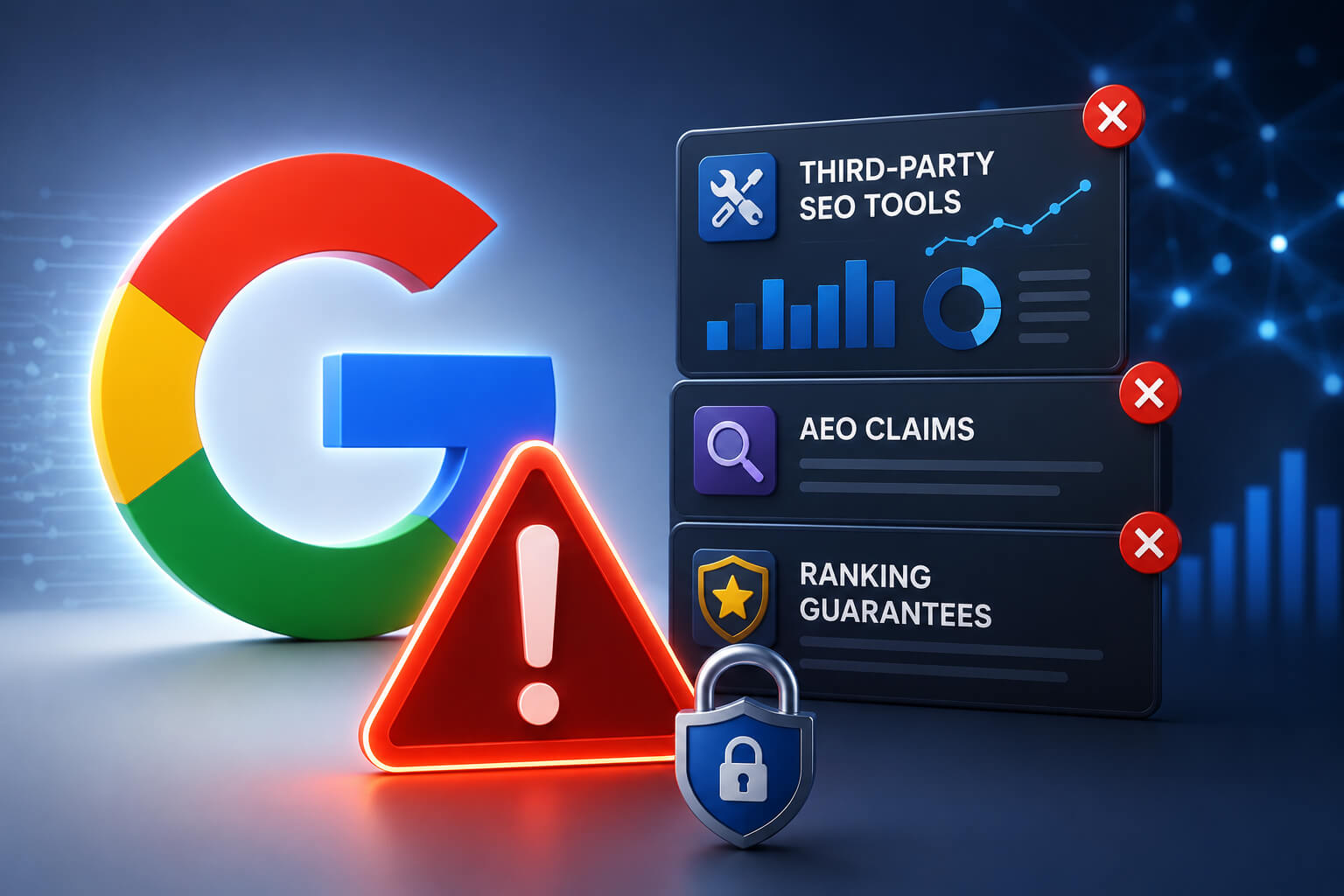
Google has updated its Search Central documentation with new guidance on how businesses should evaluate third-party SEO tools, SEO services, and advice related to search visibility.
The update is especially important for brands, creators, publishers, agencies, and social media-driven businesses that rely on search traffic, AI discovery, and content visibility to grow online.
Google’s new guidance makes one thing clear: third-party SEO tools can be helpful, but they are not endorsed by Google and cannot guarantee rankings.
Google Adds New Guidance on Third-Party SEO Tools
Google introduced a new Search Central document focused on third-party SEO tools, services, and advice. The document explains how website owners should think critically before following recommendations from outside SEO platforms, agencies, consultants, or automated tools.
The guidance covers several common SEO service areas, including sitemap generation, indexing directives, SEO content creation, ranking improvement recommendations, and tools that claim to improve visibility in AI-powered search experiences.
This includes services often marketed as AEO, or answer engine optimization, and GEO, or generative engine optimization.
Google Says It Does Not Endorse Third-Party SEO Tools
One of the biggest takeaways from the update is Google’s warning that it does not evaluate or approve third-party SEO tools.
Businesses should be careful when a tool or service claims it is “approved,” “accepted,” or “endorsed” by Google Search. According to Google’s guidance, third-party tools do not have access to Google’s internal ranking data.
That means no SEO platform, audit tool, agency, or consultant can guarantee first-place rankings or guaranteed performance in Google Search.
Why This Matters for Social Media Brands and Publishers
For social media publishers and digital brands, SEO is becoming more connected to content distribution, AI search visibility, and audience discovery.
Many creators and businesses now use SEO tools to decide what topics to cover, how to structure articles, and how to optimize content for Google, AI Overviews, and other search experiences. Google’s update is a reminder that these tools should support decision-making, not replace critical thinking.
A third-party tool may identify technical issues, suggest keywords, or recommend content improvements. However, Google says website owners should compare those suggestions with official Google Search guidance before making major changes.
Google Recommends Using Search Console
Google also recommends that website owners use Google Search Console because it provides data directly from Google Search.
While third-party tools may estimate traffic, rankings, or visibility, Search Console gives site owners first-party information about search performance, indexing, queries, and page visibility.
For publishers and social media news sites, this makes Search Console one of the most reliable tools for understanding how content is performing in Google Search.
Google Updates Its “Do You Need an SEO?” Document
In addition to the new third-party SEO guidance, Google updated its existing “Do You Need an SEO?” documentation.
The updated document now includes more advice about evaluating SEO providers, especially when they use third-party tools or offer audits. Google advises site owners to only grant read access to Search Console during the audit stage and to be cautious of anyone promising guaranteed top rankings.
Google also encourages businesses to ask whether SEO recommendations are supported by official Google documentation, especially when the advice involves AI search experiences, AEO, or GEO.
What Businesses Should Watch Out For
Google’s update highlights several red flags businesses should keep in mind when reviewing SEO tools or hiring an SEO provider.
Be cautious of services that claim to be approved by Google, promise guaranteed rankings, rely only on third-party audit scores, or recommend major changes without explaining the reasoning behind them.
Businesses should also be careful with tools that claim they can guarantee better visibility in AI search results. AI-powered search is changing quickly, but Google’s message remains consistent: helpful, reliable, people-first content is still the foundation of strong search performance.
What This Means for SEO Strategy
Google is not saying businesses should avoid third-party SEO tools completely. Instead, the company is encouraging website owners to use them carefully.
The best approach is to treat SEO tools as research and support systems. They can help identify opportunities, surface technical issues, and guide content planning. But final decisions should be based on official guidance, real performance data, and the needs of the audience.
For brands, publishers, and social media-focused businesses, this update reinforces the importance of building trustworthy content strategies instead of chasing quick ranking promises.
Final Thoughts
Google’s latest SEO documentation update is a clear warning to businesses: third-party SEO tools can be useful, but they are not a shortcut to guaranteed rankings.
As search becomes more influenced by AI features, AEO, and GEO services, businesses need to be more careful about who they trust and what advice they follow.
For digital publishers and social media brands, the safest path forward is to combine official Google guidance, Search Console data, and high-quality content built for real users.