

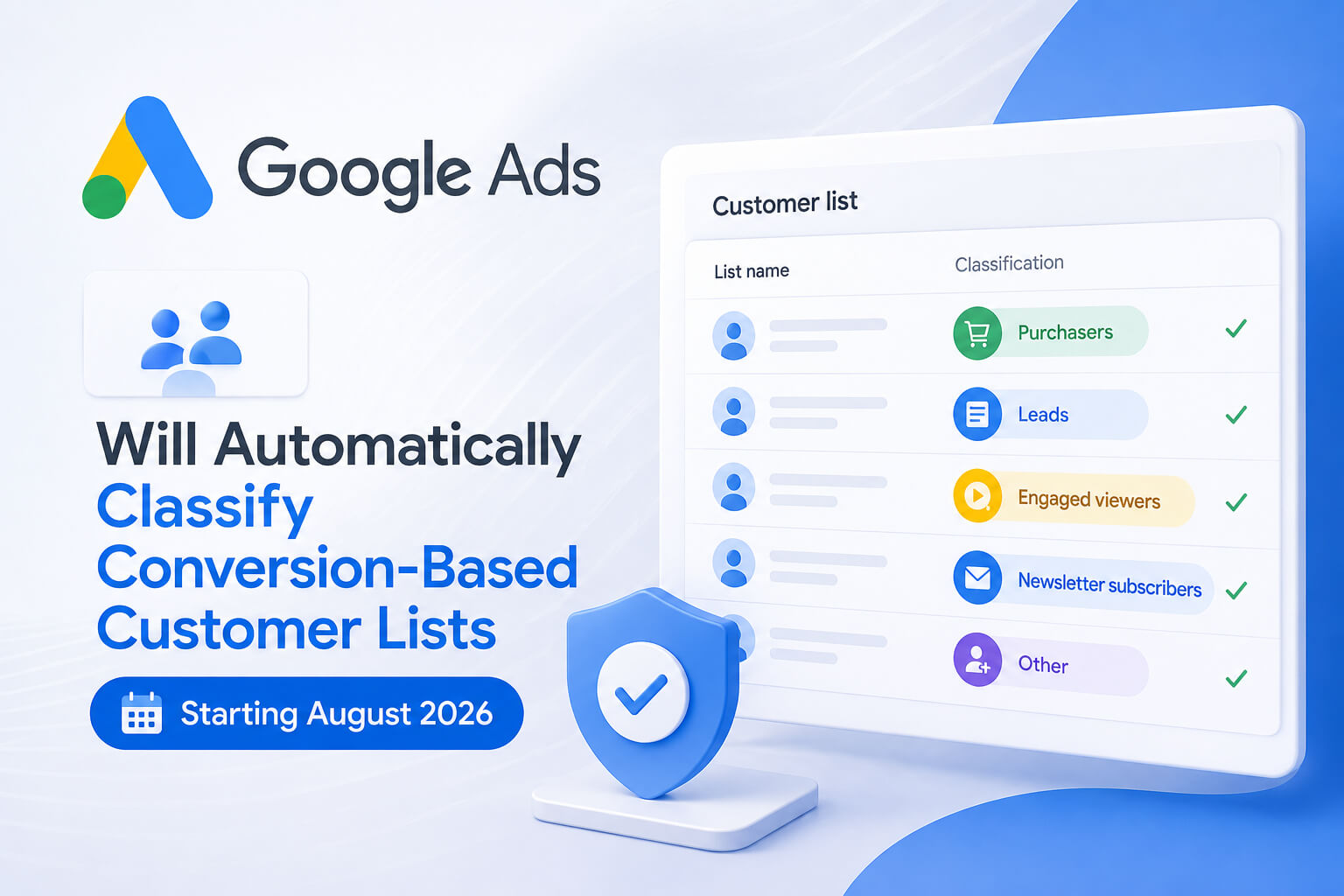
Google Ads is preparing a major update that will affect how advertisers manage conversion-based customer lists inside Audience Manager.
Starting in August 2026, Google Ads will automatically classify eligible conversion-based customer lists into specific customer types. This means advertisers will no longer be able to leave certain Customer Match lists unclassified.
The update is part of Google’s broader push toward more automated audience management, especially as advertisers increasingly rely on automated bidding, customer acquisition goals, and retention-focused campaign strategies.
What Is Changing in Google Ads?
Under the new system, Google Ads will automatically assign conversion-based customer lists into customer lifecycle categories. These may include:
- Existing customers
- New customers
- Other customer segments
This change is especially important for advertisers using Customer Match audiences created from conversion data. Google wants advertisers to provide clearer signals about where each audience sits in the customer journey.
In simple terms, Google is trying to better understand whether an audience represents people who are already customers, potential new buyers, or another type of segment.
Why Google Is Making This Change
Google’s advertising systems rely heavily on automation. Campaign types and bidding strategies increasingly use audience signals to decide who should see an ad, how much to bid, and what type of user is most valuable to a business.
By standardizing customer list classifications, Google can better separate acquisition audiences from retention audiences.
This could help Google Ads systems make more accurate decisions when optimizing campaigns for goals such as:
- Finding new customers
- Re-engaging existing customers
- Improving conversion value
- Supporting lifecycle-based marketing
- Improving automated bidding decisions
For advertisers, this means audience setup may become even more important. A poorly classified list could influence how Google understands campaign goals.
Why Advertisers Should Pay Attention
This update may seem like a small technical change, but it could affect campaign performance.
Advertisers using new customer acquisition goals, Customer Match lists, or retention campaigns should review their audience settings before the automatic classification rollout begins.
If Google automatically classifies a list in a way that does not match a business’s internal customer definitions, campaigns may optimize toward the wrong audience type.
For example, a list intended for new customer targeting could be treated differently if Google interprets it as an existing customer audience. That could impact bidding, targeting, reporting, and overall campaign efficiency.
What Advertisers Should Do Before August 2026
Advertisers should audit their Customer Match and conversion-based lists inside Google Ads Audience Manager before the deadline.
Important questions to review include:
- Are current customer lists classified correctly?
- Which lists represent existing customers?
- Which lists are designed for customer acquisition?
- Do Google’s customer type labels match internal business definitions?
- Are any conversion-based lists missing important audience context?
Taking action early may help prevent unexpected changes once Google begins enforcing automatic classification.
How This Fits Into Google’s Bigger Automation Strategy
Google has been steadily moving advertisers toward more automated campaign management. From Performance Max to automated bidding and AI-driven audience signals, Google Ads is becoming less manual and more dependent on machine learning.
This customer list classification update follows the same direction. Google wants cleaner audience signals so its automated systems can make better decisions.
For advertisers, the message is clear: audience data quality matters more than ever.
The Bottom Line
Google Ads will automatically classify conversion-based customer lists starting in August 2026. The change is designed to improve how Google’s systems understand customer lifecycle stages and optimize campaigns.
Advertisers should review their audience classifications now, especially if they use Customer Match, customer acquisition goals, or retention strategies.
A quick audit today could help avoid performance issues when the automatic classification update goes live.