

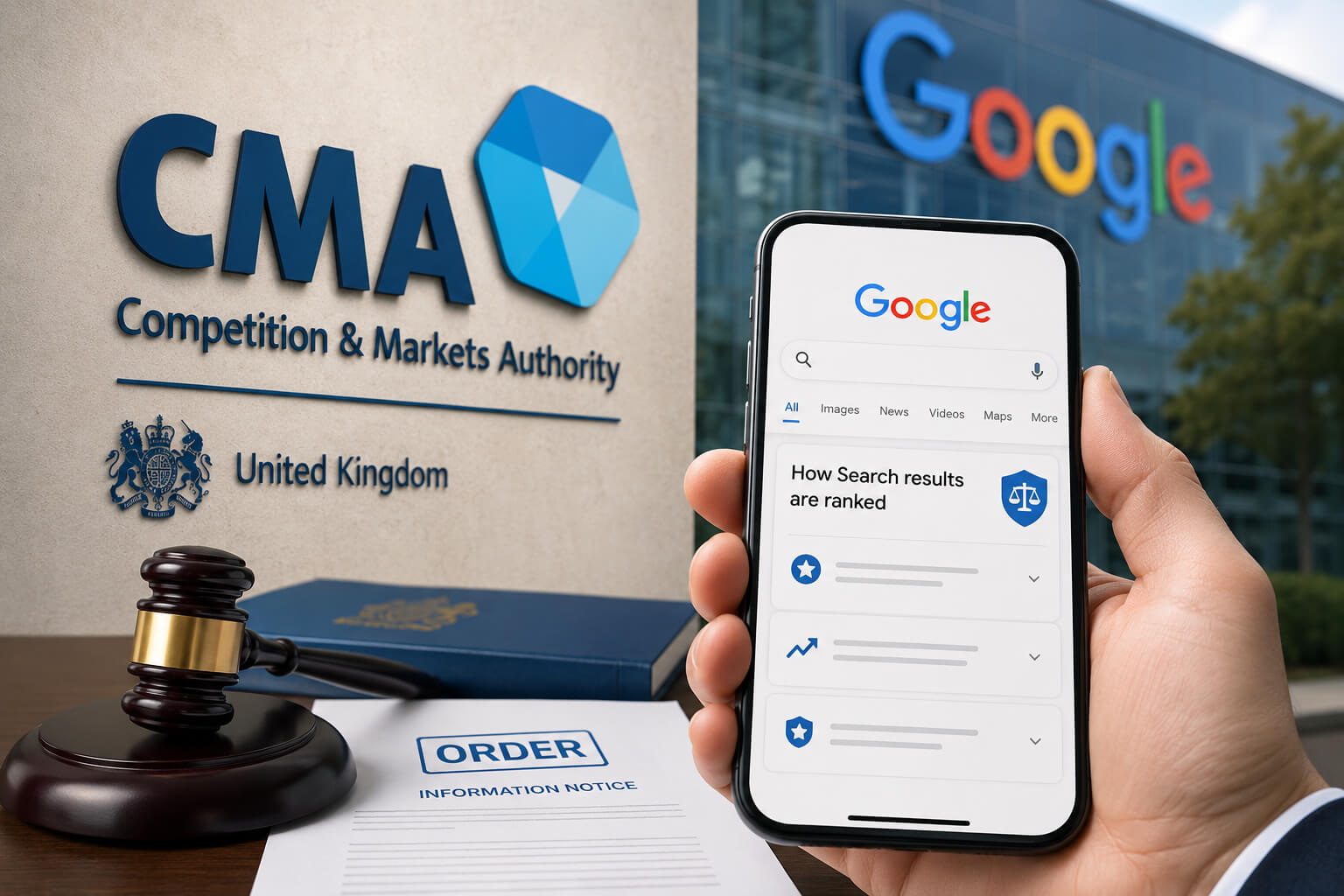
The UK’s Competition and Markets Authority has ordered Google to provide more transparency about how its search results are ranked, marking another major regulatory move against the tech giant’s dominance in online search.
The new requirements are aimed at making Google Search fairer and more predictable for businesses, publishers, and users. Under the order, Google must improve transparency around organic search rankings, create clearer complaint processes for businesses, and allow users to move their search data to approved third-party services.
Google Faces New Search Ranking Transparency Rules
The CMA wants Google to explain more clearly how search rankings work, especially for businesses that depend on visibility in Google Search. Many companies have complained that ranking changes can happen with little warning, affecting traffic, revenue, and customer reach.
The regulator is requiring Google to use objective and non-discriminatory criteria when ranking organic search results. This also applies to AI Overviews, Google’s AI-generated search summaries, but not to paid sponsored results.
Google has six months to implement the fair ranking requirements.
Why the CMA Is Targeting Google Search
Google remains one of the most powerful gateways to online information. For many websites, ranking well in Google Search can directly affect business growth, advertising income, and customer discovery.
The CMA said businesses need greater confidence that search results are ranked fairly. The regulator also wants businesses to have effective ways to raise concerns when ranking changes significantly affect them.
The order requires Google to:
- Provide clearer information about how search rankings work
- Give businesses advance notice of major ranking changes where appropriate
- Create better processes for businesses to raise ranking-related concerns
- Use fair, objective, and non-discriminatory ranking criteria for organic results
AI Overviews Are Also Included
The requirements also cover Google’s AI Overviews, which appear above traditional search results for some queries. This is significant because AI-generated answers can reduce clicks to websites if users get the information they need directly from Google’s results page.
Publishers and website owners have raised concerns about how AI search features use their content and how those features affect referral traffic. The CMA’s latest action follows earlier measures giving publishers more control over how their content appears in Google’s AI-powered search experiences.
Google Must Also Allow Search Data Portability
In a separate requirement, the CMA ordered Google to make it easier for users to transfer their search data to authorized third-party services.
This could allow companies to build personalized services using a user’s Google search data, such as shopping deals, travel suggestions, discount platforms, or rewards programs. Google has three months to comply with the data portability requirement.
The CMA said this change could help create more competition by allowing other businesses to develop services based on user-approved search data access.
What This Means for Website Owners and SEO
For SEO professionals, publishers, and online businesses, the CMA’s order could be important if it leads to clearer guidance on how Google ranks search results.
However, it remains unclear how much detail Google will actually provide. Google’s ranking systems are among the company’s most valuable assets, and full transparency could make the search engine more vulnerable to spam and manipulation.
Still, even limited improvements could help businesses better understand major ranking changes and raise concerns when they believe their visibility has been unfairly affected.
Google Is Expected to Push Back
Google is unlikely to reveal the full details of its ranking algorithm. The company has long argued that its systems are designed to show users the most relevant and useful results while protecting search quality from manipulation.
The CMA’s order could lead to a major debate over how much transparency is possible without weakening the quality and security of search results.
The Bigger Picture
The UK’s action is part of a broader global push to regulate major technology platforms. Regulators are increasingly focused on search transparency, AI-generated content, publisher rights, and data portability.
For now, the CMA’s order puts new pressure on Google to explain more about how search rankings work and to give businesses and users more control in the search ecosystem.
If enforced effectively, the move could reshape how Google communicates ranking changes and how businesses respond to search visibility shifts.